Neo-Ottomanism etiketine sahip kayıtlar gösteriliyor. Tüm kayıtları göster

24 Kasım 2009 Salı

Patriot Games


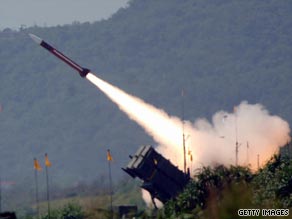
There's a certain feeling of Cold War déjà vu in Turkey these days. Back then, NATO ally Turkey was seen as a front line state in the standoff against a dangerous nuclear power and was even home to American missiles (the intermediate range Jupiters, quietly removed as part of the deal made to end the Cuban missile crisis). Cut to 2009, when western ally Turkey is again being viewed by some as a front-line defense against a (potential) nuclear power -- this time around Iran -- and might soon be home to an American-made long-range missile defense system.

The story has been developing in a very interesting way. It started with a report a few weeks ago in a Polish publication that claimed that the U.S. is scrapping its controversial European-based missile defense plan (true), to be based in Poland and the Czech Republic, and was going to place the system in Turkey instead (still not clear). Turkish officials quickly denied the Polish report, but soon after it emerged that the Pentagon had recently informed Congress that it plans to sell to Turkey the Patriot missile defense system. To clear things up, the Turkish military than announced that it is considering spending up to $1 billion for its first long-range missile defense system, but that it is also looking at Russian and Chinese weapons.

The question being asked in Turkey, of course, is in which direction will those defensive missiles be aimed? Iran might be the most obvious answer, but Turkish diplomats have gone out of their way to say this isn't so. "It is wrong to draw links between the Patriot and Iran," Turkish Foreign Minister Ahmet Davutoglu told CNN Turk last week. "We neither have a perception of threat from any of the neighboring countries, nor have any military or security related preparation against them."

So is Turkey planning to spend $1 billion to defend itself against a non-existent threat? I doubt that's the case. What seems to be happening here is another expression of the difficult line Ankara has to take when it comes to its relations with Iran. On the one hand, Turkey has significantly improved its relationship with Iran in recent years, something that is reflected in the two countries' growing trade relations and in the fact that Turkish leaders were among the first (and only) to congratulate Iranian president Mahmoud Ahmedinejad on his recent controversial reelection. On the other hand, despite the smiling faces and the warm language being used in both capitals, Ankara and Tehran are regional rivals and Iran's nuclear program is as worrying for Turkey as it is for other countries in the region.

"There is an understanding between the United States and Israel and Turkey on the perception that Iran may become a threat if it develops nuclear weapons. There is also a common understanding with the rest of the world that [Iranian president Mahmoud] Ahmedinejad is becoming a dangerous leader with his very provocative and aggressive statements," said political analyst Sami Kohen.

"As far as that is concerned, there is common ground," Kohen added. "But the question is how do you deal with the problems, and that’s where the differences are...."

....Turkey and Iran share a 310-mile (499 kilometer) border, and both Turkish and Iranian diplomats like to point out that the two Muslim neighbors have been a peace for centuries. But Turkish analysts say that peace is based on a delicate balance of military power -- one that would be upset if Iran obtained nuclear weapons.

"The bottom line is that Turkey can’t accept an Iran with nuclear weapons. A nuclear weapons-capable Iran, or a nuclear-armed Iran is not in the interest of Turkey," says Mustafa Kibaroglu, an expert on nuclear non-proliferation issues at Bilkent University in Ankara.

The increasing international pressure on Iran comes at a time when the Turkish government has been working hard to improve relations with its neighbors, especially Iran. The last few years have seen Turkish-Iranian trade grow dramatically, reaching $4 billion in 2005. In 2000, bilateral trade turnover stood at roughly $1 billion.

The government’s emphasis on trade, says Kibaroglu, has helped create a division among Turkish policymakers on how to tackle the Iran question. "I don’t think officials agree among themselves what to do," he says. "The perception of the government, as far as I can see, doesn’t fit the perception of the military. The military is more skeptical of Iran’s intentions when compared to the politicians who run the country."
(Hurriyet Daily News's Barcin Yinanc covers this dilemma in a recent column, which you can read here.)

Turkey is clearly trying to strike a very delicate pose here, working to defend itself against an "unspecified" regional threat while maintaining that it doesn't feel threatened by any of its neighbors. An interesting political stew is being cooked up -- what's not clear is just who is stirring the pot.

Kurtlar Vadisi, Part Deux

A few years ago it was “Kurtlar Vadisi,” a television series that read the national mood in Turkey and served up a highly combustible cultural product that catered to that mood and, to a certain extent, help further shape it.

The ongoing “Kurtlar Vadisi,” which tells the story of Polat Alemdar, a patriotic undercover intelligence officer who infiltrates the mafia but starts operating in the murky zone where the interests of unsavory elements of the state and of organized crime meet, brilliantly tapped into the growing nationalism of the last few years. A 2006 spin-off movie, Turkey's highest-grossing movie ever, fed on the anti-Americanism of the Bush period, sending the show's hero to Iraq to do battle with the US military (while also helping bust up a Jewish-run organ harvesting plot).

A few years ago, the show’s second season was to have started with a scene showing a group of Kurdish guerillas stopping a bus full of civilians – including a little girl – and systematically mowing them down with machine guns. Fearing thing were going too far, Turkey’s broadcast authority actually stepped in, forcing the show off the air for a season. (You can read more in this Christian Science Monitor article I wrote at the time.)

Now Turkish television viewers can move on to the Israel-Palestine conflict, with a show called “Ayrilik” (separation). The show’s opening sequence shows a group of Israeli soldiers – hey, this sounds familiar –mowing down civilians, including a little girl, who is shot point blank by a stalking, zombie-like soldier. The Israeli government has condemned the show, which is being shown on a state-run channel, in very strong terms. Despite having yanked “Kurtlar Vadisi” off the air a few years ago, this time Turkish officials are saying “Ayrilik” will stay on the air. “Turkey does not have censorship,” Turkish foreign minister Ahmet Davutoglu told reporters.

The background to this, on the one hand, is the current sorry state of relations between Turkey and Israel, which have been deteriorating since Israel’s invasion of Gaza. Turkey, of course, was one of Israel’s harshest critics during the invasion. And, needless to say, Turkish Prime Minister Recep Tayyip Erdogan’s now legendary performance in a panel discussion in Davos, where he stuck to it to Israeli president Shimon Peres and then stormed off the stage, helped usher a new frosty period for Turkish-Israeli relations. (For background on this, take a look at this recent analysis piece I wrote for JTA.)

Relations took a further dive recently, after Turkey indefinitely postponed a multinational air force exercise that was to also include Israel. Turkey’s foreign ministry originally released a statement cautioning Israel to use “common sense” and not read any political meaning into the postponement. But Erdogan soon contradicted that statement, saying in an interview that Turkey had to “listen to the voice of the people” and not allow Israel to participate. Turkish foreign minister Ahmet Davutoglu, architect of the “zero problems” policy, in recent statements also indicated that hosting Israeli jets in the current atmosphere would not be appropriate.

Turkey, of course, has the right to strongly criticize Israeli policy and actions and can play an important role in doing that. Ankara also seem intent on showing the Israeli government that it won't be business as usual until things start moving on the peace process. But the current atmosphere in Turkey regarding Israel – one that Turkish PM Erdogan seems to be stoking with his relentless and highly emotional attacks on Israel – seems to be veering towards demonization (hence, the arrival of a show like “Ayrilik”). That’s bad for Turkey-Israel relations, but also damaging for the region. Ultimately, a rupture between Ankara and Jerusalem leaves Israel further isolated in the area, something that would inevitably damage the already faltering peace process.

This also ultimately damages Turkey. Obviously, Ankara’s wish to play mediator between Israel and its neighbors is now almost laughable, since it’s very hard to imagine Israel trusting Turkey with that role. But it goes further than that. Turkey is frequently touted as having the advantage of being one of the countries welcomed “both in Jerusalem and Tehran.” If Turkey stops being welcomed in Jerusalem, then it becomes just another Middle Eastern country with a dysfunctional relationship with Israel, something that makes it less of strategic and foreign policy asset in the eyes of the United States, the European Union and other Middle Eastern countries.

Turkish officials like to talk about the country’s “strategic depth” in the Middle East, based on its rich history in the region and its advantageous geographic location. In the case of its relationship with Israel, Turkey’s “strategic depth” is currently being undermined by an intellectual and diplomatic shallowness.

The Turkish Connection


There's a lot of talk these days about Turkey's growing influence and reputation in the Arab and Muslim worlds. One place where this can be seen very clearly is in Gokce, a dirt-poor village near Turkey's border with Syria. In the last year, the Arabic-speaking village's men -- many of whom still practice polygamy -- have started looking for second wives online, where, thanks to Turkey’s growing clout and visibility in the Middle East, Turkish bride surfers are suddenly seen as quite a catch by women in the region.

For a number of reasons, the villagers have had particular success in luring Moroccan women to Gokce. From a recent Eurasianet piece of mine about the village and its online bride hunters:
To get a sense of how modern technology can be put to use in the service of ancient tradition, one might want to consider a visit to the Yildirim internet cafe in Gokce, a small, poor and dusty village near Turkey’s southern border with Syria.

When Hasip Yildirim, a 34-year-old former truck driver, opened the cafe two years ago, he imagined it would be a place for local children to play video games and surf the web. Little did he know it would become Gokce’s lonely hearts’ club, although with a somewhat unsavory twist.

Many of the men in Gokce (pronounced "Gohk-che") practice polygamy, which, although officially outlawed in 1926, endures throughout Turkey’s impoverished and predominantly-rural southeast.

In the past, the village’s Arabic-speaking men used to hop across the border to find a second wife in Syria. But the arrival of the internet in the village has changed that. Since Yildirim opened his cafe two years ago, Gokce’s men have started looking for wives online, where -- thanks to Turkey’s growing clout and visibility in the Middle East -- Turkish bride surfers are suddenly seen as quite a catch by women in the region.

"Everyone’s coming to the internet cafe now to find a wife," said cafe-owner Yildirim, speaking inside his fluorescent-lit, one-room business, which has some 20 computer terminals. "Sometimes, there’s no space to sit down."

Locals have zeroed in on Morocco since its citizens can come to Turkey without a visa. In the last year, some 10 Moroccan brides -- all second wives, including a 45-year-old who married a man 30 years her senior -- have come to Gokce, population 3,200. More than a dozen more are expected to arrive in the coming year.

"Everybody wants a Moroccan bride now," said Yildirim. He now acts as a kind of virtual matchmaker, scouting out potential Moroccan wives on an Arabic chat website called Habibti.com ("habibti" is the feminine version of "my dear" in Arabic).

"The Moroccans think Turkey has prestige, that it’s a strong country. They also trust Turkey -- they know it’s a Muslim country and that we pray and read the Koran," Yildirim said. "They don’t ask if we are rich or poor, or what we eat. The first question they ask is if we are Muslim or not."

Issam Moussaoui, executive director of the Democratic Association of Moroccan Women, a women’s rights organization based in Casablanca, says a poor economy and little access to jobs have forced many Moroccan women to look to marriage abroad -- particularly in Europe -- as a way out of enduring poverty.

For some Moroccan women, being a second wife might not sound so strange. Polygamy in Morocco was banned only in 2004.

Meanwhile, after decades of not being involved in the Middle East, Turkey’s stock in the region is rising. Prime Minister Recep Tayyip Erdogan’s harsh criticism of Israel’s attack on Gaza earlier this year endeared Turkey to many in the Arab world, while, in recent years, several Turkish soap operas -- dubbed into Arabic -- have become hits across the Middle East, further reintroducing the country to the region.

"Moroccans know a lot more about Turkey now," said Moussaoui, speaking by telephone from Casablanca. "Especially now with the television shows, people know Turkey a lot more. A lot of women watch these shows daily. They know a lot about Turkish culture and that Turkish men [seem] more romantic than other ones."
You can read the whole article here.

(photo -- Hasip Yildirim, owner of an internet cafe in Gokce, a village in Turkey where local men are going online to find Arabic-speaking second wives. Photo by Yigal Schleifer.)