Turkish military etiketine sahip kayıtlar gösteriliyor. Tüm kayıtları göster

24 Kasım 2009 Salı

The Kurdish Gambit

I have a piece up on the Eurasianet website looking at what the Turkish government's upcoming "Kurdish Initiative" -- a reform plan aimed at resolving the long-standing Kurdish issue -- might look like and what are some of the challenges facing it. There are a number of internal and external factors pushing Ankara to finally take a decisive (and non-military) step in dealing with the Kurdish issue, one of the more interesting ones being the fact that jailed PKK leader Abdullah Ocalan is planning to release his own "road map" on how to solve the Kurdish problem.

Things are certainly moving forward on the issue in Ankara, with one of the more interesting and positive developments being the announcement that Turkish PM Recep Tayyip Erdogan has finally agreed to meet with members of the pro-Kurdish Democratic Society Party (DTP). Erdogan has previously refused to even shake hands with the DTP's parliamentarians, saying they must first denounce the PKK.

More on this issue from my Eurasianet article:
After decades of conflict and repressive policies, Turkish leaders appear to be taking concrete steps toward resolving the Kurdish issue. But analysts warn that domestic opposition and the lack of consultation with Kurds themselves could limit any plan’s chances for success.

In recent months, Turkish leaders have sent strong signals that an initiative to deal with the Kurdish issue is in the works. In May, President Abdullah Gul said that Turkey had an "historic opportunity" to address the issue, while Prime Minister Recep Tayyip Erdogan, just before departing for a recent trip to Syria, told reporters: "Whether we call it the Kurdish, the southeast or eastern problem, whether we call it the Kurdish initiative, we have started work on this."

In late July, meanwhile, Turkish Interior Minister Besir Atalay said during a nationally televised news conference that the government is actively working on a comprehensive plan -- one based on democratization and expanded rights. Although he didn’t offer any specific details or a timeframe, Atalay told reporters, "We have the intention to take determined, patient and courageous steps."

Writing in the English-language Hurriyet Daily News, political analyst Mehmet Ali Birand said the government’s anticipated initiative does represent an important shift. "The Turkish Republic has now accepted the existence of a Kurdish issue and a [Kurdistan Workers’ Party (PKK)] problem, and has started comprehensive efforts towards finding a solution. Until now, these issued were accepted, but ignored," he wrote.

"Now, for the first time, the Kurdish issue is being separated from the PKK issue, and again for the first time, a plan is being developed that will influence Turkey’s future," Birand continued.

According to reports in the Turkish press, the government’s plan may include a series of moves on the cultural rights front, including the establishment of private Kurdish-language television stations and Kurdish language faculties in universities, as well allowing towns and villages to once again use their original Kurdish names. It is not clear if it would include a wide-ranging amnesty program for members of the outlawed PKK. The group continues to attack Turkish security forces, mostly from its hideouts in northern Iraq.

Observers say a series of domestic and regional developments are forcing the political and military establishments in Ankara to confront the Kurdish issue in a new way. "The Turkish military is finally coming to grips with the fact that it cannot win this war, no matter what happens [to the PKK] in northern Iraq. It’s finally dawning on them that some kind of political solution is necessary," says Henri Barkey, a senior associate at the Carnegie Endowment for International Peace in Washington and an expert on Turkish politics.

Barkey also says Turkey’s ambitions to play a larger role on the world stage, particularly as a regional mediator, are also forcing Turkish leaders to take stock of the country’s own problems. "Turkey is lecturing other countries, like Israel and [China], about human rights issues and here you have a country where the Kurdish language is illegal. That is absurd," Barkey said. "They have to do something. There is a discrepancy between domestic Turkey and the image it is trying to project abroad...."

....The big question now being asked is, once the government announces its plan, what are its chances for success? The [International Crisis Group's Hugh] Pope says an important element of the current debate, which may help any government initiative succeed, is that it is mostly domestically driven. "Ten years ago everyone in Europe would be lecturing Turkey about the Kurds. This current talk about a Kurdish opening is domestically driven, which makes it a lot more legitimate," he says. "Before, when Turkey was being lectured from the outside, it caused people to circle the wagons and stop listening."

Dogu Ergil, a professor of political science at Ankara University, says the Kurdish initiative could be hurt by what he sees a lack of consultation between the government and other key players - particularly the Kurds themselves - about how to best approach the problem. "We lack a definition of what we are trying to solve and some people have gathered behind closed doors and decided they have the solution," he said.

"For the Kurdish people in Turkey, it is still a state initiative," Ergil continued. "The method has not been democratic enough so far. ... That’s the problem. The whole thing is a mystery."

Some analysts suggest that the AKP government may find itself in a bind on the issue. "They are going to have to sell this to a skeptical public and the opposition is going to raise hell," noted Barkey.

Ultimately, the government’s main challenge may be to come up with a plan that is politically viable, but which also meets rising expectations. "The problem with things like this is that when you raise expectations so high and then you don’t do something, it’s like setting a match to a tank of gasoline," says Barkey.
You can read the full article here.

Ergenekon's New Clothes?

Gareth Jenkins, a veteran Turkey analyst and an expert on the country's military and security affairs, has a new report out that takes a comprehensive look at the complicated Ergenekon coup plot trial and investigation. Although Jenkins has been a consistent critic of various aspects of the Ergenekon case, the report -- published by the Silk Road Studies Program at Johns Hopkins -- strikes me as fair and objective. Still, after reading the report, it's easy to see what Jenkins's verdict on Ergenekon is: the case has very few legs to stand on, and even those are rather shaky. What I found particularly interesting about the report, which also provides very good background about the history of the "Deep State" in Turkey and of the Ergenekon story itself, is its look at how Turkey's predilection towards conspiracy theories might be tainting the Ergenekon case.

From the report (pdf), entitled "Between Fact and Fantasy: Turkey's Ergenekon Investigation":
Whether among those formally indicted as part of the Ergenekon investigation or those detained in the police raids and subsequently released without charge, many appear to have been guilty of nothing more than opposition to the AKP. In fact, there is no proof that the Ergenekon organization as described in the indictments exists or has ever existed.

Indeed, the indictments are so full of contradictions, rumors, speculation, misinformation, illogicalities, absurdities and untruths that they are not even internally consistent or coherent.
This is not to say that the Ergenekon investigation is simply a politically motivated fabrication. There is no reason to doubt that most of those involved in prosecuting the case sincerely believe in the organization’s existence and are unable or unwilling to see the contradictions and irrationalities that are endemic in the indictments. The indictments themselves appear to be the products of “projective” rather than deductive reasoning, working backwards from the premise that the organization exists to weave unrelated individuals, statements and acts into a single massive conspiracy. The more elusive the concrete evidence for Ergenekon’s existence is, the more desperate the attempts to discover it become. Rather than convincing the investigators that what they are looking for does not exist, this elusiveness appears merely to make the organization more fearsome and powerful in their minds; and further fuel their desperation to uncover and eradicate it.

A predilection for conspiracy theories is nothing new in Turkey and can be found across the political spectrum. Both a large proportion of AKP supporters and many of those in law enforcement genuinely believe that a malicious conspiratorial cabal – which most associate with the Deep State – has been not only manipulating the political process but supporting or guiding a large proportion of the political violence in the country. Amongst
AKP supporters, attention tends to focus particularly on violence carried out in the name of Islam; where their sincere horror at the carnage that is sometimes perpetrated in the name of their religion has created a culture of denial, and a refusal to believe that their fellow Muslims could be responsible.
The report takes a good look at some of the problems with the evidence, indictments and judicial procedures in the case. About the case's first indictment (there have been three released so far, and a fourth is expected), Jenkins writes:
The indictment was also marred not only by repeated examples of flawed reasoning but numerous absurdities and contradictions. Most remarkably, despite its extraordinary length, the indictment produced no evidence that the Ergenekon organization it described even existed, much less that the accused were all members and engaged in a coordinated terrorist campaign to overthrow the government.

Indeed, rather than being based on deductive reasoning, the indictment appeared to project onto a collection of disparate events and individuals – not all of whom are necessarily innocent of any wrongdoing – a conspiracy theorist’s template of a ubiquitous, and almost omnipotent, centrally controlled organization which had not only penetrated every sphere of public life but been responsible for virtually every act of politically-motivated violence and terrorism in modern Turkish history….

…. some of the claims in the indictment about Ergenekon’s deeds and ambitions extended beyond the bounds of credibility. For example, the indictment claimed that the organization had met with the then U.S. Vice President Dick Cheney to discuss toppling the AKP government and replacing it with a more acceptable alternative. Even more absurdly, the indictment maintained that investigators had uncovered evidence that the “Ergenekon Terrorist Organization” planned to “manufacture chemical and biological weapons and then, with the high revenue it earned from selling them, to finance and control every terrorist organization not just in Turkey but in the entire world.”
In the end, Jenkins calls the Ergenekon case a "wasted" opportunity:
From a broader perspective, the public debate triggered by the discovery of the crate of grenades in Ümraniye in June 2007 could have provided an opportunity for the establishment of an independent truth commission which could perhaps have enabled Turks – including both secular nationalists and Islamists – to come to terms with the realities of recent Turkish history. But, in the short-term, a more pressing concern is not the wasted opportunity for Turkey to confront its past but what the Ergenekon investigation might be saying about its future, and the disturbing questions it raises about the prospects for democracy and the rule of law in the country.
Clearly, there are other views out there about the merits and the strength of the evidence of the Ergenekon case, but Jenkins's report is highly recommended reading for anyone interested in this complex story.

Patriot Games


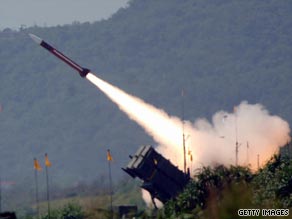
There's a certain feeling of Cold War déjà vu in Turkey these days. Back then, NATO ally Turkey was seen as a front line state in the standoff against a dangerous nuclear power and was even home to American missiles (the intermediate range Jupiters, quietly removed as part of the deal made to end the Cuban missile crisis). Cut to 2009, when western ally Turkey is again being viewed by some as a front-line defense against a (potential) nuclear power -- this time around Iran -- and might soon be home to an American-made long-range missile defense system.

The story has been developing in a very interesting way. It started with a report a few weeks ago in a Polish publication that claimed that the U.S. is scrapping its controversial European-based missile defense plan (true), to be based in Poland and the Czech Republic, and was going to place the system in Turkey instead (still not clear). Turkish officials quickly denied the Polish report, but soon after it emerged that the Pentagon had recently informed Congress that it plans to sell to Turkey the Patriot missile defense system. To clear things up, the Turkish military than announced that it is considering spending up to $1 billion for its first long-range missile defense system, but that it is also looking at Russian and Chinese weapons.

The question being asked in Turkey, of course, is in which direction will those defensive missiles be aimed? Iran might be the most obvious answer, but Turkish diplomats have gone out of their way to say this isn't so. "It is wrong to draw links between the Patriot and Iran," Turkish Foreign Minister Ahmet Davutoglu told CNN Turk last week. "We neither have a perception of threat from any of the neighboring countries, nor have any military or security related preparation against them."

So is Turkey planning to spend $1 billion to defend itself against a non-existent threat? I doubt that's the case. What seems to be happening here is another expression of the difficult line Ankara has to take when it comes to its relations with Iran. On the one hand, Turkey has significantly improved its relationship with Iran in recent years, something that is reflected in the two countries' growing trade relations and in the fact that Turkish leaders were among the first (and only) to congratulate Iranian president Mahmoud Ahmedinejad on his recent controversial reelection. On the other hand, despite the smiling faces and the warm language being used in both capitals, Ankara and Tehran are regional rivals and Iran's nuclear program is as worrying for Turkey as it is for other countries in the region.

"There is an understanding between the United States and Israel and Turkey on the perception that Iran may become a threat if it develops nuclear weapons. There is also a common understanding with the rest of the world that [Iranian president Mahmoud] Ahmedinejad is becoming a dangerous leader with his very provocative and aggressive statements," said political analyst Sami Kohen.

"As far as that is concerned, there is common ground," Kohen added. "But the question is how do you deal with the problems, and that’s where the differences are...."

....Turkey and Iran share a 310-mile (499 kilometer) border, and both Turkish and Iranian diplomats like to point out that the two Muslim neighbors have been a peace for centuries. But Turkish analysts say that peace is based on a delicate balance of military power -- one that would be upset if Iran obtained nuclear weapons.

"The bottom line is that Turkey can’t accept an Iran with nuclear weapons. A nuclear weapons-capable Iran, or a nuclear-armed Iran is not in the interest of Turkey," says Mustafa Kibaroglu, an expert on nuclear non-proliferation issues at Bilkent University in Ankara.

The increasing international pressure on Iran comes at a time when the Turkish government has been working hard to improve relations with its neighbors, especially Iran. The last few years have seen Turkish-Iranian trade grow dramatically, reaching $4 billion in 2005. In 2000, bilateral trade turnover stood at roughly $1 billion.

The government’s emphasis on trade, says Kibaroglu, has helped create a division among Turkish policymakers on how to tackle the Iran question. "I don’t think officials agree among themselves what to do," he says. "The perception of the government, as far as I can see, doesn’t fit the perception of the military. The military is more skeptical of Iran’s intentions when compared to the politicians who run the country."
(Hurriyet Daily News's Barcin Yinanc covers this dilemma in a recent column, which you can read here.)

Turkey is clearly trying to strike a very delicate pose here, working to defend itself against an "unspecified" regional threat while maintaining that it doesn't feel threatened by any of its neighbors. An interesting political stew is being cooked up -- what's not clear is just who is stirring the pot.

Patriot Games, Pt. II

A bit more to follow up my previous post about Turkey's plans to purchase it's first missile defense system (possibly American-made Patriots), a story which I think is going to develop in interesting ways, particularly in light of Iran's recent missile tests and Turkish prime minister Recep Tayyip Erdogan's upcoming visit to Tehran.

First, from a new Eurasianet analysis piece of mine:
Speculation is building in Turkey over whether Ankara will play a part in a revamped US missile-defense network, one designed mainly to contain Iran. Conjecture is being fueled by two recent developments: the Obama administration’s decision to scrap the construction of an anti-missile shield in Central Europe, and Turkey’s own announcement that it intends to purchase its first missile-defense system.

Although it’s not clear if Ankara’s plan to buy a missile defense system is being coordinated with the United States, experts say the purchase is an indication that -- despite its warming relations between Turkey and Iran, and Turkish officials’ promotion of a diplomatic solution to the question of Iran’s nuclear program -- Turkey is not taking any chances regarding its neighbor’s intentions.

"There is an unstated rivalry [between Turkey and Iran]. They are two powerful states in the region and each one has its own strategy and Turkey now has one of playing an active role in the region," says Sami Kohen, a columnist with the daily Milliyet and a veteran observer of Turkish foreign policy.

"Turkey thinks that there are a lot of common interests with Iran. There are improving trade, economic, and energy ties. There has been a period of normalization, which has now been followed by a period of closer ties," Kohen continued. "Nevertheless, people in responsible positions who want to see Turkey grow as a key regional player believe there is a rivalry with Iran."

If it wants to play the part of regional power-broker, added Kohen, "Turkey can’t lag [militarily] behind other countries in the neighborhood - Iran on the one hand and Greece on the other…."

….Although Turkish officials to date have kept their distance from American plans to introduce a more fluid European-based missile defense plan, experts say Ankara could benefit by being involved.

Even though the Obama administration has abandoned plans to place an anti-missile system in Poland and the Czech Republic, US officials have made it clear that they intend to deploy such a system elsewhere, in a location better able to cope with the rapidly escalating Iranian threat.

"The whole plan is going on, but in a different version, and it gets more interesting now with countries like Turkey possibly [getting] involved. It seems like the scope of the system is being increased," said Lt Col Marcel de Haas, a senior researcher at the Netherlands Institute of International Relations.

"The question is if [placing Patriot missiles in Turkey is] going to be part of a theater missile defense?" he adds.

"If that is the case for Turkey -- in this whole expanded scheme of missile defense -- it is quite interesting. I say it strengthens the Turkish position in NATO, and you can also consider it part of European defense, which could possibly bring Turkey closer to the European Union."

Other observers have suggested that placing Patriots in Turkey could also bolster Turkish-US relations, which have gone through several strained periods in recent years.

"Poland’s loss may be Turkey’s and America’s gain: Turkey is the only NATO country that borders Iran, and US-Turkish cooperation on Tehran is key to Washington’s success in tackling Iran’s nuclearization," Washington-based analyst Soner Cagaptay recently wrote in an online forum hosted by the New York Times.
The German Marshall Fund, meanwhile, has just published a piece on the subject, by Ian Lesser, one of the sharpest Turkey analysts out there. From Lesser's analysis:
The Turkish public remains relatively relaxed about Iran’s nuclear program. But Turkey’s defense planners cannot be so sanguine about the implications of proliferation around the region. Turkey has much to lose from the prospect of a nuclear or near-nuclear Iran, not to mention the potential for multiple new nuclear arsenals. Turkey is vulnerable to the cascading effects of nuclear and missile proliferation over the wider neighborhood, from the Aegean to South Asia, including effects on conventional military balances and doctrine. More dramatically, Turkey, with its Western security ties, is exposed to the retaliatory consequences of American, European, or Israeli action against Iran or other proliferators on Turkey’s borders. The physical vulnerability of Turkish cities, as well as Incirlik airbase and oil terminals on the Mediterranean, coupled with growing Turkish unease about the credibility of NATO guarantees, give Ankara a strong interest in strategic reassurance alongside enhanced defenses….

…. In theory, the new U.S. approach to missile defense in Europe offers Turkey the prospect of improved relations with Russia, greater consensus on containing Iran’s nuclear ambitions, a more effective response to immediate threats to Turkish territory, and renewed reassurance from NATO allies. But capturing these theoretical gains and avoiding perceived threats to Turkish sovereignty will require much closer coordination between Ankara and its allies.
Lesser's entire piece (pdf) is worth reading.


Ties and Minarets


There are two interesting news items in the Turkish press that strike me as connected and instructive regarding some of the domestic challenges facing Turkey.

First up, from the town of Cizre, in Turkey's predominantly-Kurdish southeast, where a local principal and shopkeeper were detained after they were accused of distributing school ties with the likeness of jailed PKK leader Abdullah Ocalan on them, rather than that of Mustafa Kemal Ataturk, the founder of modern Turkey. From a Hurriyet Daily News report:
According to reports, a police officer saw the tie given to his daughter and lodged a complaint. The local prosecutor’s office was told the figure on the tie “looked like PKK leader Abdullah Öcalan.”

An investigation was launched and an expert appointed by the prosecutor’s office supported the claims.

Both the school principal and the shopkeeper who sold the ties were detained by police Tuesday and questioned while the school collected the ties.

The shopkeeper said he had asked a company in Istanbul to produce 115 ties and had placed Atatürk’s silhouette on them as per the school’s order.

He said he and the principal were questioned a day before being released pending trial. “The Atatürk silhouette on the tie doesn’t look anything like Öcalan anyway.I can’t imagine how they came to that conclusion,” he said.
(You can see a shot of the offending tie here. To my eye (and Kamil Pasha's), it looks a lot like Ataturk, but go figure. As the article reminds readers, this is only the latest phantom Ocalan sighting that has led to legal action. In July, an Ankara lawyer found himself in trouble after authorities charged him with having a photo of Ocalan up on his office wall. Turns out the man with the bushy mustache in the photo was the lawyer's deceased father.

Next, from Istanbul, a very interesting story about the blurring of the boundaries between mosque and state. As several papers have reported, the minarets of five historic mosques were recently strung up with lights that spelled out nationalist slogans. The lights, known as "mahyas," are usually hung during Ramadan and deliver blessings and religious sayings. This time, the messages included the famous slogan "How happy is he who says he is a Turk," as well as "The country comes first," and "We owe our gratitude to the army."

The messages drew the indignation of civil groups, which held demonstrations in the streets of İstanbul yesterday. Rıdvan Kaya, the chairman of the Freedom Association (Özgür-Der), termed the nationalist messages in mahyas a source of “ugliness” and “provocation."

“We want authorities to reveal who led to such ugliness. Are they still not aware that such moves aim to drag Turkey into an atmosphere of war? While the government is exerting efforts to settle the Kurdish issue, some are attempting to provoke the people,” Kaya said....

....No body or institution has yet claimed responsibility for the controversial mahyas. Today's Zaman asked the Directorate of Religious Affairs about the move, but directorate officials denied responsibility. “We are in control of the mosques, but they are owned by the General Directorate of Foundations. The Directorate of Religious Affairs is fully outside of this mahya issue,” they said.

The General Directorate of Foundations, however, pointed to the Regional Directorate of Foundations in İstanbul and the İstanbul Governor's Office as responsible bodies in the determination of messages spelled out on mahyas.

The director of press and public relations of İstanbul Governor's Office, Nazır Şentürk, said İstanbul Governor Muammer Güler would call a press conference on the mahya controversy. No press conference was called by the time Today's Zaman went to print. The mahyas were spelled out on the occasion of the anniversary of the liberation of İstanbul from occupation by foreign powers following the War of Independence.
(As a side note, Turkey watchers may recall that prior to taking office, prime minister Recep Tayyip Erdogan spent time in jail, accused of inciting religious hatred by reciting a poem that said: "The mosques are our barracks, the domes our helmets, the minarets our bayonets and the faithful our soldiers..." In light of that, it's interesting to see messages in support of the military being strung from minarets.)

Both these stories strike me as having a lot to do with Turkey's struggle to define it's post-Ataturkist identity. School ties and minarets now seem to be yet another battleground in this continuing fight.

(Photo -- an Istanbul mosque with the message "How happy is he who says he is a Turk" strung up in lights between its minarets. From Today's Zaman.)