Turkish foreign policy etiketine sahip kayıtlar gösteriliyor. Tüm kayıtları göster

24 Kasım 2009 Salı

Dueling Pipelines and Turkey’s Delicate Energy Dance

A few weeks ago, Ankara was the scene of the celebratory signing of an intergovernmental agreement for the troubled Nabucco pipeline project, designed to weaken Russia’s grip on Europe’s energy supply by bringing Caspian and Middle Eastern gas to the continent via Turkey and the Balkans. (For more background on Nabucco, take a look at this series of posts from Istanbul Calling.) Although the pipeline is still far from becoming a reality, the signing in Ankara was hailed as an important step in helping Europe diversify its energy supply.

Cut to last week, when Ankara was the scene of the signing of another series of energy-related agreements, only this time with Russian Prime Minister Vladimir Putin. Among the agreements signed was one that would allow Russia’s proposed South Stream gas pipeline – seen as a potentially lethal rival to the Nabucco project – to run through Turkish waters on the Black Sea.

What’s going on here? Had Ankara just stabbed Nabucco (and the European Union, it’s main supporter) in the back? Turkish officials clearly don’t want things to look that way, with “diplomatic sources” telling the English-language Hurriyet Daily News that “Nabucco is still [Turkey’s] priority.” That might be the case, but Ankara certainly also knows that as it moves along on Nabucco, it also needs to keep Moscow’s interests in mind. If anything, the recent dueling signings in Ankara serve as a good example of the delicate dance that Turkey now has to perform as part of its new, multi-polar foreign policy, which seeks to minimize conflict with its neighbors while also raising the country’s regional and international profile. As political scientist Bulent Aras points out in a new report he wrote on Turkish-Russian relations for the Foundation for Political Economic and Social Research (SETA), an Ankara-based think tank: “Under the strong influence of its new geographic thinking toward Russia, Ankara tries to avoid taking sides in any ‘Russia versus the West’ struggles, while developing its own relations with Moscow.”

From being intense regional rivals and then Cold War foes, Turkey and Russia have moved towards being strong partners in trade, defense and energy. That said, Turkey – like Europe – also finds itself heavily dependent on Russian energy supplies, importing 63 percent of its gas and 28 percent of its oil from Russia. It is now also working out terms with a Russian company to build Turkey’s first nuclear power plant, something that critics say will only deepen the country’s dependence on Russia. Still, Ankara policymakers realize that working together with Russia makes more sense for Turkey than antagonizing it.

But as Aras points out in his SETA report, this new approach to Russia will not be without its limitations:
“There is no guarantee that the Turkish politicians’ projection of good relations with Russia will be possible without endangering its relations with the EU and the US….
…. The current developments indicate that Turkish and Russian policy-makers have the political will to improve bilateral relations in the realm of politics, economy and security. However, these relations are not free of a number of serious problems that could threaten a derailing in the growing ties; both countries have converging and conflicting interests in neighboring regions. This fact, in combination with the high-profile status of both countries, makes Turkish-Russian relations promising, yet difficult.”

The Middle East's Troubled Waters


Something worth keeping an eye is the growing dispute between Iraq, Syria and Turkey over water issues. All three countries, which share many of the same river borne water resources, are going through a period of decreased rainfall. The difference, of course, is that Turkey is upstream from Syria and Iraq, which means that it controls much of the water that eventually trickles down to the other two countries. Iraq, in particular, is accusing Turkey of taking too much of the water that flows through the Tigris and Euphrates rivers, which flow through all three countries, because of its extensive dam network on the two rivers. (For more on Turkey's dam building project in the southeast of the country, take a look at this Eurasianet piece of mine.)

From a Reuters report on the brewing water crisis:
Turkey has failed to meet a pledge to release more water down the Euphrates and Tigris rivers to Iraq, an Iraqi minister said on Thursday, and called for a coordinated water policy in the region.

In June, Turkish Energy Minister Taner Yildiz said Ankara will guarantee a minimum 400 cubic metres of water per second from the Tigris and Euphrates rivers to help its neighbour weather a drought.

But Iraq's Water Resources Minister Abdul Latif Rasheed told Reuters that Iraq was still not getting enough water from Turkey, and said his country's agriculture and drinking water supplies were at stake.

"It isn't happening and we want Turkey to implement that agreement. The amount of water we are getting is fluctuating," Rasheed said on the sidelines of a meeting between Turkish, Iraqi and Syrian ministers to discuss water sharing from the Tigris and Euphrates rivers.

"The minimum requirement Iraq needs is 600 cubic metres. Sometimes it fluctuates to less than 200 cubic metres. We need two or three times that amount," he said.

Iraq accuses Turkey, and to a lesser extent Syria, of choking the Euphrates with hydroelectric dams that have restricted the flow, damaging the farm sector already suffering from decades of war, sanctions and neglect.

The dispute is a delicate diplomatic issue for Iraq as it seeks to improve ties with its neighbours. Turkey is one of Iraq's most important trading partners.

Turkish officials say flows to Iraq have been decreased by Syria, which also shares the Tigris and Euphrates basin.

But Rasheed said Iraq was getting less water since Turkey began building dams in the southeast of the country under the GAP development project....

....Turkey says it has occasionally limited the flow on the Tigris and Euphrates to less than 400 cubic metres per second to meet its own needs during extremely dry weather.

Syria's Irrigation Minister Nader al-Bunni said his country was "concerned" about the amount of water that flows out of Turkey and said neighbours sharing the Euphrates and Tigris rivers needed to find a solution that is "sustainable from a social and humanitarian point of view".

Hundreds of thousands of people have been forced to abandon their land in Syria, a major farm commodities producer in the region, due to the effects of the country's worst drought in decades.
(You can read the full article here.)

[UPDATE I -- Turkey has apparently now reversed course on the issue, saying it would release more water than the minimum required, although it did not specify how much.)

Water issues and climate change are clearly going to pose major political and diplomatic challenges for the Middle East in the years ahead. For some interesting perspectives on this, take a look at the most recent edition of Bitterlemons, an online roundtable on Middle East issues. One of the articles, titled "Conflict Ahead," by Aharon Zohar, a specialist in regional and environmental planning, offers this warning:
These issues will affect stability mainly in countries and societies that are already destabilized due to ethno-religious conflict, weak economies and environmental decline. One expression of this could be violence between countries rich in water and energy resources and those without, particularly where they share drainage basins of international rivers: Uganda, Ethiopia, Sudan and Egypt over the Nile; Turkey, Syria and Iraq over the Euphrates; and Lebanon, Syria, Jordan and Israel over the Jordan and its tributaries. Another instance could involve internal destabilization of moderate states like Egypt and Jordan due to water shortages....

....Readiness to counter the consequences of global warming in the Middle East demands coordination and problem-solving on a broad regional level. Yet in view of the hostility and tension that characterize regional inter-state relations, this option appears less likely than specific ad-hoc cooperation between specific countries.
[UPDATE II -- The Washington Post has an interesting piece about some environmentally suspect joint projects Israel and Jordan are undertaking in an effort to deal with their looming water shortage problems. Worth reading.)

(photo -- a dam near Sanliurfa, in southeast Turkey, part of the country's GAP dam and irrigation project. By Yigal schleifer)

For Turkey and Armenia, a Roadmap's Final Destination Still Unclear


Last week's announcement by Turkey and Armenia that they have agreed on a set of protocols that will lead towards the normalization of their relations and the opening of their borders was certainly welcome news. A previous breakthrough in Turkish-Armenian reconciliation -- last April's vague declaration that the two countries had agreed on a "roadmap" for restoring relations -- quickly fizzled out when Turkish prime minister Recep Tayyip Erdogan declared that there would be no progress on the Armenian front until the "full liberation" of the Azeri territory of Nagorno-Karabakh, occupied by Armenian forces since 1993.

What's different this time around is the release of the detailed protocols, which offer a clear path towards the reopening of the Turkish-Armenian border and renewal of diplomatic ties between Ankara and Yerevan. But has Turkey really changed its position on the Nagorno-Karabakh issue? Will the Turkish parliament, which must ratify the protocols for them to take effect (as does Armenia's), support the move without any concrete action on the Nagorno-Karabakh front? From an analysis piece I have up on the Eurasianet website:
The Nagorno-Karabakh peace process is a complicating factor for the ratification of the protocols. Turkey is Azerbaijan’s strongest ally, and Ankara imposed its economic blockade on Armenia in 1993 to support Baku’s efforts to retain control over Karabakh. Currently, Armenian forces control Karabakh, along with large areas of Azerbaijan proper that surround the enclave.

The timing of the withdrawal of Armenian forces from occupied Azerbaijani lands is one of the primary sticking points in the Karabakh peace process.

The announcement last April of the existence of a "roadmap" to renew ties between Turkey and Armenia led to a strong backlash from Baku, and to what seemed like a stepping back from the deal on Ankara’s part.

During a May 14 address to the Azerbaijani parliament, Turkish Prime Minister Recep Tayyip Erdogan declared "that the border between Turkey and Armenia will be open only after the full liberation of Azerbaijani occupied territories."

Although the recently released protocols make no mention of a linkage between the normalization of Turkish-Armenian ties and the Karabakh peace process, "there’s no doubt that the Karabakh issue looms over this reconciliation process," says Kiniklioglu.

"If there is no movement on Nagorno-Karabakh, it will be up to the Turkish parliament to assess the situation and judge accordingly."

Observers believe the Turkish government is now counting on international pressure to increase on Armenia and Azerbaijan to reach some kind of agreement regarding the disputed territory. Although the AKP has a majority in parliament, many observers believe that it will be difficult to ratify the protocols without any movement on the Nagorno-Karabakh front.

"Erdogan obviously feels that Turkey wants to see something on Nagorno-Karabakh before they can take it to parliament. The problem is [that the protocols are] in Turkey’s interest, even if nothing happens on Nagorno-Karabakh. Turkey’s overwhelming national interest is in putting this Armenian problem behind it," says Hugh Pope, a Turkey analyst with the Brussels-based International Crisis Group.
Over at Today's Zaman, the Brookings Institute's Omer Taspinar also takes a look at last week's announcement, saying it might be a bit to early to break out a bottle of "nice Caucasian champagne to celebrate." The protocols being ratified by both the Turkish and Armenian parliaments is a big "if," Taspinar says. Reminding readers that this breakthrough in Turkish-Armenian relations started with Turkish president Abdullah Gul going to Armenia for a World Cup qualifying game between the two countries' national teams, Taspinar writes:
The good news is that the so-called “soccer-diplomacy” is alive and well. The not so good news is that we are still at halftime, and the fanatic supporters of the two national teams can cancel the game or disqualify their teams by throwing sharp knifes on the field....

....So, last week's announcement comes just in time to maintain the façade of Turkish-Armenian reconciliation. If no sharp knives are thrown onto the field, soccer diplomacy will inch forward. It may still be too early to speak of a genuine rapprochement between Ankara and Yerevan. Yet, no one accuses the two parties of not trying. Negotiations between stubborn neighbors are never easy. But as Winston Churchill wisely said, “To jaw-jaw is always better than to war-war.”
So where is this Turkish-Armenian "roadmap" actually going to lead to? The next few weeks will give a clearer indication of that. One thing is clear: the protocols agreed upon by Ankara and Yerevan might not refer to Nagorno-Karabakh, but the "roadmap" for Turkish-Armenian reconciliation leads straight through the heart of that disputed territory.

Patriot Games


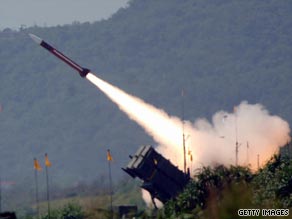
There's a certain feeling of Cold War déjà vu in Turkey these days. Back then, NATO ally Turkey was seen as a front line state in the standoff against a dangerous nuclear power and was even home to American missiles (the intermediate range Jupiters, quietly removed as part of the deal made to end the Cuban missile crisis). Cut to 2009, when western ally Turkey is again being viewed by some as a front-line defense against a (potential) nuclear power -- this time around Iran -- and might soon be home to an American-made long-range missile defense system.

The story has been developing in a very interesting way. It started with a report a few weeks ago in a Polish publication that claimed that the U.S. is scrapping its controversial European-based missile defense plan (true), to be based in Poland and the Czech Republic, and was going to place the system in Turkey instead (still not clear). Turkish officials quickly denied the Polish report, but soon after it emerged that the Pentagon had recently informed Congress that it plans to sell to Turkey the Patriot missile defense system. To clear things up, the Turkish military than announced that it is considering spending up to $1 billion for its first long-range missile defense system, but that it is also looking at Russian and Chinese weapons.

The question being asked in Turkey, of course, is in which direction will those defensive missiles be aimed? Iran might be the most obvious answer, but Turkish diplomats have gone out of their way to say this isn't so. "It is wrong to draw links between the Patriot and Iran," Turkish Foreign Minister Ahmet Davutoglu told CNN Turk last week. "We neither have a perception of threat from any of the neighboring countries, nor have any military or security related preparation against them."

So is Turkey planning to spend $1 billion to defend itself against a non-existent threat? I doubt that's the case. What seems to be happening here is another expression of the difficult line Ankara has to take when it comes to its relations with Iran. On the one hand, Turkey has significantly improved its relationship with Iran in recent years, something that is reflected in the two countries' growing trade relations and in the fact that Turkish leaders were among the first (and only) to congratulate Iranian president Mahmoud Ahmedinejad on his recent controversial reelection. On the other hand, despite the smiling faces and the warm language being used in both capitals, Ankara and Tehran are regional rivals and Iran's nuclear program is as worrying for Turkey as it is for other countries in the region.

"There is an understanding between the United States and Israel and Turkey on the perception that Iran may become a threat if it develops nuclear weapons. There is also a common understanding with the rest of the world that [Iranian president Mahmoud] Ahmedinejad is becoming a dangerous leader with his very provocative and aggressive statements," said political analyst Sami Kohen.

"As far as that is concerned, there is common ground," Kohen added. "But the question is how do you deal with the problems, and that’s where the differences are...."

....Turkey and Iran share a 310-mile (499 kilometer) border, and both Turkish and Iranian diplomats like to point out that the two Muslim neighbors have been a peace for centuries. But Turkish analysts say that peace is based on a delicate balance of military power -- one that would be upset if Iran obtained nuclear weapons.

"The bottom line is that Turkey can’t accept an Iran with nuclear weapons. A nuclear weapons-capable Iran, or a nuclear-armed Iran is not in the interest of Turkey," says Mustafa Kibaroglu, an expert on nuclear non-proliferation issues at Bilkent University in Ankara.

The increasing international pressure on Iran comes at a time when the Turkish government has been working hard to improve relations with its neighbors, especially Iran. The last few years have seen Turkish-Iranian trade grow dramatically, reaching $4 billion in 2005. In 2000, bilateral trade turnover stood at roughly $1 billion.

The government’s emphasis on trade, says Kibaroglu, has helped create a division among Turkish policymakers on how to tackle the Iran question. "I don’t think officials agree among themselves what to do," he says. "The perception of the government, as far as I can see, doesn’t fit the perception of the military. The military is more skeptical of Iran’s intentions when compared to the politicians who run the country."
(Hurriyet Daily News's Barcin Yinanc covers this dilemma in a recent column, which you can read here.)

Turkey is clearly trying to strike a very delicate pose here, working to defend itself against an "unspecified" regional threat while maintaining that it doesn't feel threatened by any of its neighbors. An interesting political stew is being cooked up -- what's not clear is just who is stirring the pot.

Patriot Games, Pt. II

A bit more to follow up my previous post about Turkey's plans to purchase it's first missile defense system (possibly American-made Patriots), a story which I think is going to develop in interesting ways, particularly in light of Iran's recent missile tests and Turkish prime minister Recep Tayyip Erdogan's upcoming visit to Tehran.

First, from a new Eurasianet analysis piece of mine:
Speculation is building in Turkey over whether Ankara will play a part in a revamped US missile-defense network, one designed mainly to contain Iran. Conjecture is being fueled by two recent developments: the Obama administration’s decision to scrap the construction of an anti-missile shield in Central Europe, and Turkey’s own announcement that it intends to purchase its first missile-defense system.

Although it’s not clear if Ankara’s plan to buy a missile defense system is being coordinated with the United States, experts say the purchase is an indication that -- despite its warming relations between Turkey and Iran, and Turkish officials’ promotion of a diplomatic solution to the question of Iran’s nuclear program -- Turkey is not taking any chances regarding its neighbor’s intentions.

"There is an unstated rivalry [between Turkey and Iran]. They are two powerful states in the region and each one has its own strategy and Turkey now has one of playing an active role in the region," says Sami Kohen, a columnist with the daily Milliyet and a veteran observer of Turkish foreign policy.

"Turkey thinks that there are a lot of common interests with Iran. There are improving trade, economic, and energy ties. There has been a period of normalization, which has now been followed by a period of closer ties," Kohen continued. "Nevertheless, people in responsible positions who want to see Turkey grow as a key regional player believe there is a rivalry with Iran."

If it wants to play the part of regional power-broker, added Kohen, "Turkey can’t lag [militarily] behind other countries in the neighborhood - Iran on the one hand and Greece on the other…."

….Although Turkish officials to date have kept their distance from American plans to introduce a more fluid European-based missile defense plan, experts say Ankara could benefit by being involved.

Even though the Obama administration has abandoned plans to place an anti-missile system in Poland and the Czech Republic, US officials have made it clear that they intend to deploy such a system elsewhere, in a location better able to cope with the rapidly escalating Iranian threat.

"The whole plan is going on, but in a different version, and it gets more interesting now with countries like Turkey possibly [getting] involved. It seems like the scope of the system is being increased," said Lt Col Marcel de Haas, a senior researcher at the Netherlands Institute of International Relations.

"The question is if [placing Patriot missiles in Turkey is] going to be part of a theater missile defense?" he adds.

"If that is the case for Turkey -- in this whole expanded scheme of missile defense -- it is quite interesting. I say it strengthens the Turkish position in NATO, and you can also consider it part of European defense, which could possibly bring Turkey closer to the European Union."

Other observers have suggested that placing Patriots in Turkey could also bolster Turkish-US relations, which have gone through several strained periods in recent years.

"Poland’s loss may be Turkey’s and America’s gain: Turkey is the only NATO country that borders Iran, and US-Turkish cooperation on Tehran is key to Washington’s success in tackling Iran’s nuclearization," Washington-based analyst Soner Cagaptay recently wrote in an online forum hosted by the New York Times.
The German Marshall Fund, meanwhile, has just published a piece on the subject, by Ian Lesser, one of the sharpest Turkey analysts out there. From Lesser's analysis:
The Turkish public remains relatively relaxed about Iran’s nuclear program. But Turkey’s defense planners cannot be so sanguine about the implications of proliferation around the region. Turkey has much to lose from the prospect of a nuclear or near-nuclear Iran, not to mention the potential for multiple new nuclear arsenals. Turkey is vulnerable to the cascading effects of nuclear and missile proliferation over the wider neighborhood, from the Aegean to South Asia, including effects on conventional military balances and doctrine. More dramatically, Turkey, with its Western security ties, is exposed to the retaliatory consequences of American, European, or Israeli action against Iran or other proliferators on Turkey’s borders. The physical vulnerability of Turkish cities, as well as Incirlik airbase and oil terminals on the Mediterranean, coupled with growing Turkish unease about the credibility of NATO guarantees, give Ankara a strong interest in strategic reassurance alongside enhanced defenses….

…. In theory, the new U.S. approach to missile defense in Europe offers Turkey the prospect of improved relations with Russia, greater consensus on containing Iran’s nuclear ambitions, a more effective response to immediate threats to Turkish territory, and renewed reassurance from NATO allies. But capturing these theoretical gains and avoiding perceived threats to Turkish sovereignty will require much closer coordination between Ankara and its allies.
Lesser's entire piece (pdf) is worth reading.


Turkey and the Nuclear Issue

As part of a series looking at how different countries might contribute to the elimination of nuclear weapons, Washington's Henry L. Stimson Center has just published a report that includes a chapter on Turkey's complicated calculus with regards to its own possible development of a nuclear weapons program (there are also chapters about Brazil and Japan). Written by Turkey expert Henri Barkey, the chapter makes for very interesting reading.

Barkey argues that if Iran does develop its own nuclear weapons, sparking off a nuclear arms race in the Middle East, then Turkey will not be able to resist the domestic and foreign pressures pushing it towards obtaining nuclear weapons of its own. The report can be downloaded here (pdf).

A Last "Last Chance" for Cyprus?

The International Crisis Group and its Turkey analyst, Hugh Pope, have had in recent years the thankless task of reminding the world (and the European Union, in particular) about the importance of solving the decades-old Cyprus problem. In a new report, ICG warns that time is really running out for a solution and that the island may be heading towards a permanent split. From the executive summary:
Three decades of efforts to reunify Cyprus are about to end, leaving a stark choice ahead between a hostile, de facto partition of the island and a collaborative federation between the Greek and Turkish Cypriot communities living in two constituent states. Most actors agree that the window of opportunity for this bicommunal, bizonal settlement will close by April 2010, the date of the next Turkish Cypriot elections, when the pro-settlement leader risks losing his office to a more hardline candidate. If no accord is reached by then, it will be the fourth major set of UN-facilitated peace talks to fail, and there is a widespread feeling that if the current like-minded, pro-solution Greek and Turkish Cypriot leaders cannot compromise on a federal solution, nobody can….

….In the absence of a Cyprus settlement, both communities on the island and Turkey will experience slower economic progress, greater defence spending and reduced international credibility.
You can find the summary and the full report here.

It's easy to dismiss the Cyprus issue, but it's one that matters -- not only for the divided island, but also for Turkey, the EU and NATO. The Cyprus problem not only has the potential to derail Turkey's EU bid, but it has already worked its way into the EU, where Cyprus uses the issue to punish Turkey, and NATO, where Turkey uses it to punish Cyprus. (For more background, take a look at a piece I wrote last year for Eurasianet). One imagines that a permanent division would only see that dynamic intensify, to the detriment of both organizations' ability to function properly.

As the report mentions, some in Turkey and Northern Cyprus believe that even if there is a permanent division, the island's tiny Turkish republic could achieve a kind of "Taiwanisation" -- de facto international recognition that leads to viability as a state. That belief, the report makes clear, is mistaken:
But north Cyprus and Taiwan can hardly be compared. Less than 300,000 Turkish Cypriots cannot measure against a large, self-governing modern industrial power with 23 million people. The EU is the most powerful actor in the eastern Mediterranean, and the Greek Cypriots are probably able to block any attempt by a member state to work in any way with the self-declared Turkish Cypriot state. Even sympathetic Turkic states like Azerbaijan and Kyrgyzstan have failed to lay on direct flights to the main Turkish Cypriot airport, primarily because of Greek Cypriot influence in the EU.

Turkey and Armenia: The Rocky Road Ahead

I have a briefing up on the World Politics Review website looking at the protocols recently signed by Turkey and Armenia to restore diplomatic relations and some of the hurdles these protocols might face in being implemented. From the briefing:
Yesterday's signing of protocols by Turkey and Armenia that pave the way for restoring relations between the two countries was, without a doubt, a historic moment. But it's still too early to break out the champagne.

The protocols -- signed in Zurich in the presence of the American, French and Russian foreign ministers -- spell out in the clearest terms to date what needs to happen in order for diplomatic ties to be restored and for the two countries' borders to be reopened. But significant hurdles, some of which involve actors outside of Turkey and Armenia themselves, still stand in the way of that actually happening.

Ankara and Yerevan broke off relations in 1993, when Turkey closed its border with Armenia. The move followed Armenia's invasion of the Azerbaijani territory of Nagorno-Karabakh, but the animosity between the two countries goes backs decades further, to what Armenia alleges was the genocide of an estimated 1.5 million Armenians under the Ottoman Turks during World War I.

Turkey admits that Armenians were killed, but claims in significantly lower numbers, and fiercely rejects suggestions that the killings were genocide. Ankara argues instead that the deaths were a result of a civil uprising, when Armenians joined forces with invading Russians.

The protocols -- signed with the help of Swiss mediation and American and European arm twisting -- call for the renewal of diplomatic ties, opening of the common border and the establishment of a host of intergovernmental sub-commissions. The most significant of the latter will include experts who will take a look at the "historical dimension" of the Turkish-Armenian relationship.

The only catch -- and a potentially deal-breaking one -- is that the protocols will only go into effect once the parliaments in both countries ratify them. And in both Turkey and Armenia, domestic opposition could stand in the way of that happening....

....Still, restoring ties promises to pay significant dividends for both Turkey and Armenia.

For Turkey, restoring relations with Armenia is critical, both for its European Union candidacy and for its regional ambitions. Ankara hopes to play a larger political and diplomatic role in the surrounding region, and to establish itself as an important energy transit route. The closed border with Armenia remains one of the glaring exceptions to Turkey's new foreign policy, which it describes as "zero problems with neighbors." It also leaves Turkey -- and the West -- dependent on volatile Georgia as the main transit route for Caspian oil and gas.

For Armenia, restoring relations with Turkey would end its isolation in the region and could provide the cash-strapped country with new economic opportunities.

The question for both countries, as well as for some of their neighbors in the region, is whether they can find a way to create a new reality in the Caucasus, or if instead they will remain hostages to history and enmity.
(You can read the full briefing here.)

Whither Turkey-Israel Relations?

Bitter Lemons, an online roundtable on the Middle East, this week covers the current turbulent state of Turkey-Israel relations. The discussion gathers four different experts (Two in Washington, one in Turkey and in Israel), who have some fairly contrasting views on the subject.

The highly-recommended roundtable can be read here.

Turkey & Israel: Trouble Behind, Trouble Ahead?

Israel's Trade and Labor Minister, Benyamin Ben-Eliezer, just finished a three-day trip to Turkey, the first visit by a top Israeli politician since the downturn in Turkish-Israeli relations that followed the war in Gaza earlier this year. On the most basic level, Ben-Eliezer's visit was a success. He met with Turkish President Abdullah Gul and Foreign Minister Ahmet Davutoglu (PM Recep Tayyip Erdogan was in Libya during Ben-Eliezer's visit) and managed to avoid the fate of Israel's ambassador to Turkey, who on a recent tour of the country's Black Sea region was pelted with eggs and upbraided by every second-rate elected official he met with.

Following his meeting with Ben-Eliezer, FM Davutoglu said "the crisis is behind us," while the Israeli minister told reporters that his visit helped stop the "snowballing" deterioration in the two countries' relations. Still, I think further problems loom on the horizon for Ankara and Jerusalem. To a large extent, Turkey is now pegging its relations with Israel to the state of Israeli-Palestinian relations, which might not bode well, at least in the short- (or even medium-) term. Milliyet columnist Sami Kohen took a look at this development in his column (in Turkish) yesterday, writing:
Turkey does not have any direct mutual problems with Israel.

At the same time though, the whole Palestinian situation with Gaza at the forefront is beginning to become a defining aspect of Turkish-Israeli relations. It seems that Ankara is starting to form this strong correlation when it comes to relations with Israel. It could be asked just how much of an effect this policy is really going to have on the Netanyahu administration’s rigid stance when it comes to Gaza and Palestinian matters in general. It appears that “Bibi” has absolutely no intent (despite pressure from Barack Obama) to change his stance on these matters. If re-activating Turkish-Israeli relations is now tied literally to developments on the Palestinian front, this will help neither bilateral relations nor the disputes between the Arabs and the Israelis.
(An interview in the Nov. 25 edition of Today's Zaman with Ibrahim Kalin, Erdogan's chief foreign policy advisor, gives more background on how Turkey is approaching Israel and the Palestinian issue. You can read it here.)

During his meeting with Ben-Eliezer, president Gul politely rebuffed an invitation to visit Israel, reportedly indicating that he wouldn't be able to do so until the situation with Palestinians improves. It seems that for now Ankara is pursuing a kind of "tough love" policy with Israel, telling Jerusalem that a certain amount of frost will cover relations as long as there is little movement on the Palestinian front. The corollary to this, of course, is that if the (already poor) state of affairs between Israel and the Palestinians starts to further deteriorate, Turkish-Israeli relations will find themselves once again being taken down with it.