Turkey-Iran relations etiketine sahip kayıtlar gösteriliyor. Tüm kayıtları göster

24 Kasım 2009 Salı

Patriot Games


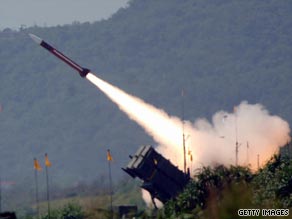
There's a certain feeling of Cold War déjà vu in Turkey these days. Back then, NATO ally Turkey was seen as a front line state in the standoff against a dangerous nuclear power and was even home to American missiles (the intermediate range Jupiters, quietly removed as part of the deal made to end the Cuban missile crisis). Cut to 2009, when western ally Turkey is again being viewed by some as a front-line defense against a (potential) nuclear power -- this time around Iran -- and might soon be home to an American-made long-range missile defense system.

The story has been developing in a very interesting way. It started with a report a few weeks ago in a Polish publication that claimed that the U.S. is scrapping its controversial European-based missile defense plan (true), to be based in Poland and the Czech Republic, and was going to place the system in Turkey instead (still not clear). Turkish officials quickly denied the Polish report, but soon after it emerged that the Pentagon had recently informed Congress that it plans to sell to Turkey the Patriot missile defense system. To clear things up, the Turkish military than announced that it is considering spending up to $1 billion for its first long-range missile defense system, but that it is also looking at Russian and Chinese weapons.

The question being asked in Turkey, of course, is in which direction will those defensive missiles be aimed? Iran might be the most obvious answer, but Turkish diplomats have gone out of their way to say this isn't so. "It is wrong to draw links between the Patriot and Iran," Turkish Foreign Minister Ahmet Davutoglu told CNN Turk last week. "We neither have a perception of threat from any of the neighboring countries, nor have any military or security related preparation against them."

So is Turkey planning to spend $1 billion to defend itself against a non-existent threat? I doubt that's the case. What seems to be happening here is another expression of the difficult line Ankara has to take when it comes to its relations with Iran. On the one hand, Turkey has significantly improved its relationship with Iran in recent years, something that is reflected in the two countries' growing trade relations and in the fact that Turkish leaders were among the first (and only) to congratulate Iranian president Mahmoud Ahmedinejad on his recent controversial reelection. On the other hand, despite the smiling faces and the warm language being used in both capitals, Ankara and Tehran are regional rivals and Iran's nuclear program is as worrying for Turkey as it is for other countries in the region.

"There is an understanding between the United States and Israel and Turkey on the perception that Iran may become a threat if it develops nuclear weapons. There is also a common understanding with the rest of the world that [Iranian president Mahmoud] Ahmedinejad is becoming a dangerous leader with his very provocative and aggressive statements," said political analyst Sami Kohen.

"As far as that is concerned, there is common ground," Kohen added. "But the question is how do you deal with the problems, and that’s where the differences are...."

....Turkey and Iran share a 310-mile (499 kilometer) border, and both Turkish and Iranian diplomats like to point out that the two Muslim neighbors have been a peace for centuries. But Turkish analysts say that peace is based on a delicate balance of military power -- one that would be upset if Iran obtained nuclear weapons.

"The bottom line is that Turkey can’t accept an Iran with nuclear weapons. A nuclear weapons-capable Iran, or a nuclear-armed Iran is not in the interest of Turkey," says Mustafa Kibaroglu, an expert on nuclear non-proliferation issues at Bilkent University in Ankara.

The increasing international pressure on Iran comes at a time when the Turkish government has been working hard to improve relations with its neighbors, especially Iran. The last few years have seen Turkish-Iranian trade grow dramatically, reaching $4 billion in 2005. In 2000, bilateral trade turnover stood at roughly $1 billion.

The government’s emphasis on trade, says Kibaroglu, has helped create a division among Turkish policymakers on how to tackle the Iran question. "I don’t think officials agree among themselves what to do," he says. "The perception of the government, as far as I can see, doesn’t fit the perception of the military. The military is more skeptical of Iran’s intentions when compared to the politicians who run the country."
(Hurriyet Daily News's Barcin Yinanc covers this dilemma in a recent column, which you can read here.)

Turkey is clearly trying to strike a very delicate pose here, working to defend itself against an "unspecified" regional threat while maintaining that it doesn't feel threatened by any of its neighbors. An interesting political stew is being cooked up -- what's not clear is just who is stirring the pot.

Patriot Games, Pt. II

A bit more to follow up my previous post about Turkey's plans to purchase it's first missile defense system (possibly American-made Patriots), a story which I think is going to develop in interesting ways, particularly in light of Iran's recent missile tests and Turkish prime minister Recep Tayyip Erdogan's upcoming visit to Tehran.

First, from a new Eurasianet analysis piece of mine:
Speculation is building in Turkey over whether Ankara will play a part in a revamped US missile-defense network, one designed mainly to contain Iran. Conjecture is being fueled by two recent developments: the Obama administration’s decision to scrap the construction of an anti-missile shield in Central Europe, and Turkey’s own announcement that it intends to purchase its first missile-defense system.

Although it’s not clear if Ankara’s plan to buy a missile defense system is being coordinated with the United States, experts say the purchase is an indication that -- despite its warming relations between Turkey and Iran, and Turkish officials’ promotion of a diplomatic solution to the question of Iran’s nuclear program -- Turkey is not taking any chances regarding its neighbor’s intentions.

"There is an unstated rivalry [between Turkey and Iran]. They are two powerful states in the region and each one has its own strategy and Turkey now has one of playing an active role in the region," says Sami Kohen, a columnist with the daily Milliyet and a veteran observer of Turkish foreign policy.

"Turkey thinks that there are a lot of common interests with Iran. There are improving trade, economic, and energy ties. There has been a period of normalization, which has now been followed by a period of closer ties," Kohen continued. "Nevertheless, people in responsible positions who want to see Turkey grow as a key regional player believe there is a rivalry with Iran."

If it wants to play the part of regional power-broker, added Kohen, "Turkey can’t lag [militarily] behind other countries in the neighborhood - Iran on the one hand and Greece on the other…."

….Although Turkish officials to date have kept their distance from American plans to introduce a more fluid European-based missile defense plan, experts say Ankara could benefit by being involved.

Even though the Obama administration has abandoned plans to place an anti-missile system in Poland and the Czech Republic, US officials have made it clear that they intend to deploy such a system elsewhere, in a location better able to cope with the rapidly escalating Iranian threat.

"The whole plan is going on, but in a different version, and it gets more interesting now with countries like Turkey possibly [getting] involved. It seems like the scope of the system is being increased," said Lt Col Marcel de Haas, a senior researcher at the Netherlands Institute of International Relations.

"The question is if [placing Patriot missiles in Turkey is] going to be part of a theater missile defense?" he adds.

"If that is the case for Turkey -- in this whole expanded scheme of missile defense -- it is quite interesting. I say it strengthens the Turkish position in NATO, and you can also consider it part of European defense, which could possibly bring Turkey closer to the European Union."

Other observers have suggested that placing Patriots in Turkey could also bolster Turkish-US relations, which have gone through several strained periods in recent years.

"Poland’s loss may be Turkey’s and America’s gain: Turkey is the only NATO country that borders Iran, and US-Turkish cooperation on Tehran is key to Washington’s success in tackling Iran’s nuclearization," Washington-based analyst Soner Cagaptay recently wrote in an online forum hosted by the New York Times.
The German Marshall Fund, meanwhile, has just published a piece on the subject, by Ian Lesser, one of the sharpest Turkey analysts out there. From Lesser's analysis:
The Turkish public remains relatively relaxed about Iran’s nuclear program. But Turkey’s defense planners cannot be so sanguine about the implications of proliferation around the region. Turkey has much to lose from the prospect of a nuclear or near-nuclear Iran, not to mention the potential for multiple new nuclear arsenals. Turkey is vulnerable to the cascading effects of nuclear and missile proliferation over the wider neighborhood, from the Aegean to South Asia, including effects on conventional military balances and doctrine. More dramatically, Turkey, with its Western security ties, is exposed to the retaliatory consequences of American, European, or Israeli action against Iran or other proliferators on Turkey’s borders. The physical vulnerability of Turkish cities, as well as Incirlik airbase and oil terminals on the Mediterranean, coupled with growing Turkish unease about the credibility of NATO guarantees, give Ankara a strong interest in strategic reassurance alongside enhanced defenses….

…. In theory, the new U.S. approach to missile defense in Europe offers Turkey the prospect of improved relations with Russia, greater consensus on containing Iran’s nuclear ambitions, a more effective response to immediate threats to Turkish territory, and renewed reassurance from NATO allies. But capturing these theoretical gains and avoiding perceived threats to Turkish sovereignty will require much closer coordination between Ankara and its allies.
Lesser's entire piece (pdf) is worth reading.


Turkey and the Nuclear Issue

As part of a series looking at how different countries might contribute to the elimination of nuclear weapons, Washington's Henry L. Stimson Center has just published a report that includes a chapter on Turkey's complicated calculus with regards to its own possible development of a nuclear weapons program (there are also chapters about Brazil and Japan). Written by Turkey expert Henri Barkey, the chapter makes for very interesting reading.

Barkey argues that if Iran does develop its own nuclear weapons, sparking off a nuclear arms race in the Middle East, then Turkey will not be able to resist the domestic and foreign pressures pushing it towards obtaining nuclear weapons of its own. The report can be downloaded here (pdf).